For the original diamond-water paradox see Adam Smith, An Inquiry into the Nature and Causes of the Wealth of Nations, Vol. I, 3rd edition (Edinburgh: William Creech, 1806), 38. https://books.google.com/books?id=xTpFAAAAYAAJ
On modern economics courses teaching only a single theory of value, see Mariana Mazzucato, The Value of Everything: Making & Taking in the Global Economy (New York: Public Affairs, 2018), 71–72. See also Mazzucato’s 2019 TED Talk at https://www.youtube.com/watch?v=uXrCeiQxWyc
For a classic summary of the cross-cultural study of holy water, see, e.g., the chapter by Mircea Eliade, “The Waters and Water Symbolism” in Mircea Eliade, Patterns in Comparative Religion: Study of the Element of the Sacred in the History of Religious Phenomena by a Distinguished Catholic Scholar (Cleveland: World Publishing Company, 1966), Ch. V.
Giles Fletcher on the River Moskva: Giles Fletcher, Of The Russe Common Wealth, originally published 1591, in Edward R. Bond, editor, Russia at the Close of the Sixteenth Century, Comprising the Treatise “Of The Russe Common Wealth” by Dr. Giles Fletcher and the Travels of Sir Jerome Horsey, Knt., Now For the First Time Printed Entire from His Own Manuscript, reprint for the Hakluyt Society (New York: Burt Franklin, 1856), 135–136. https://books.google.com/books?id=P5A0AQAAMAAJ. Nearly three centuries later in 1872, another British observer quipped of this same ceremony: “The populace regard this ceremony with excessive superstition. Upon the retirement of the imperial cortege, they rush with eager haste to the opening, anxious to touch the consecrated stream, and fill pitchers from it to carry home. Even infants have been sent with their nurses to be plunged, under the idea that if the immersion is endured they will be fortified to bear all the perils of life.” See Thomas Milner, The Gallery of Geography: A Pictorial and Descriptive Tour of the World, Volume II (Glasgow: W.R. M’Phun & Son, 1872), 748.
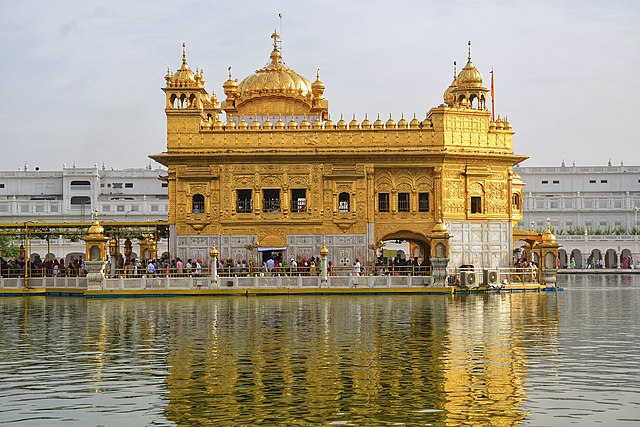
Rev “C” and the Golden Temple: Rev. C., “A Visit to the Sacred Reservoir of the Sikhs,” in The Calcutta Christian Observer, Edited “by Christian Ministers of Various Denominations” Vol. IV (Jan.–Dec., 1835): 169–173.
Sacred waters in India today: Rana P.B. Singh, “Sacrality and Waterfront Sacred Places in India: Myths and the Making of Place” in Celeste Ray, editor, Sacred Waters, Kindle Edition (London: Routledge, 2020), 90–91. Taylor and Francis. Kindle Edition.
R.P. Masani, Folklore of Wells, Being a Study of Water-Worship in East and West (Bombay: D.B. Taraporevala Sons & Co., 1918), xviii.
Celeste Ray, “Paying the Rounds at Ireland’s Holy Wells” in Anthropos, Vol. 110 (2015): 417.
Steve A. Smith, “Local Cadres Confront the Supernatural: The Politics of Holy Water (Shenshui) in the PRC, 1949-1966,” in The China Quarterly, no. 188 (2006): 1010. http://www.jstor.org/stable/20192702.1010
Waterfalls in the Smokies: See this short 2012 video by the Great Smoky Mountains Association, “Waterfalls in the Great Smoky Mountains,” at https://www.youtube.com/watch?v=ZMQ_pVh2zmY, accessed 29 Dec., 2023.
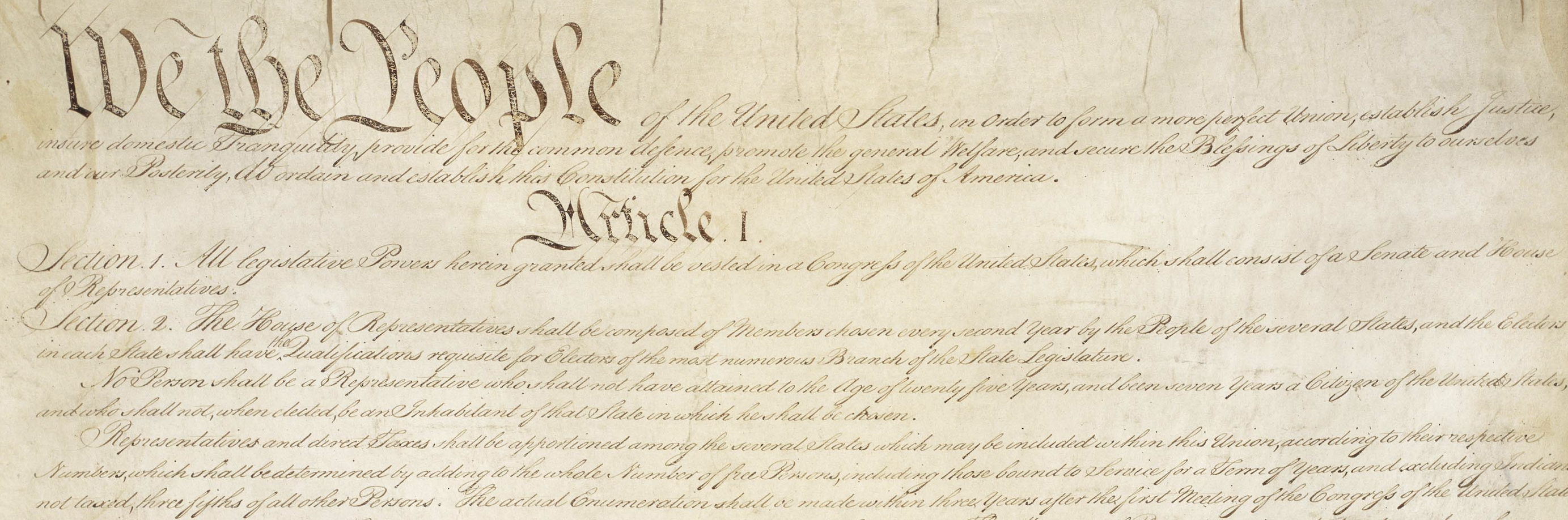
Did the framers of the U.S. Constitution set up the country’s government to be a republic or a democracy? Some folks have surprisingly strong opinions on this question, often with good reason. Yet the words republic and democracy have very similar meanings, so what’s the big deal? The answer has to do with the ways that the historic founders of the USA thought about history—specifically the histories of the democracies and republics that came before them. To make things even more confusing, the Constitution’s authors got some of their history secondhand, through one of their favorite political philosophers, Charles Montesquieu (1689–1755), who had some very specific—and surprising—things to say about republics and democracies. Check out this episode to learn why many people of the past would find many of our present-day political debates on this topic to be especially odd.asdf
Find more original, primary documentation on this issue and many of your most pressing founding father-related questions by searching Founders Online at the U.S. National Archives: https://founders.archives.gov/
John Jay, Alexander Hamilton and James Madison, The Federalist Papers, Clinton Rossiter, Editor (New York: Signet Classic, 2003).
Ralph Ketcham, editor, The Anti-Federalist Papers and the Constitutional Convention Debates: The Clashes and the Compromises that Gave Birth To Our Form of Government (New York: Signet Classic, 2003).
Athenian Democracy & the Roman Republic
General information on both Athenian democracy and Roman republicanism may be found with any solid college-level Western Civilization textbook from the past couple of decades. For this episode I relied heavily on the following two textbooks:
Joshua Cole and Carol Symes, Western Civilizations (New York: W.W. Norton, 2023).
Dennis Sherman & Joyce Salisbury, TheWest in the World, Vol I. (New York: McGraw Hill, 2015).
Anthony Everitt, Cicero: The Life and Times of Rome’s Greatest Politician (New York: Random House, 2001).
On the role of women in the Roman Republic, see Aude Chatelard and Anne Stevens, “Women as Legal Minors and Their Citizenship in Republican Rome,” Clio. Women, Gender, History, no. 43 (2016): 24–47. https://www.jstor.org/stable/26242541.
Montesquieu
Free Google Books English translation: Charles Montesquieu, The Spirit of Laws, Translated from the French by Thomas Nugent (London, The Colonial Press, 1900). Volume I at https://books.google.com/books?id=_uotAAAAIAAJ